
Mold and odor removal is a deep clean plus two things: the growth is physically stripped from the blower wheel, the coil and the drain pan until the surfaces are bare, and an antimicrobial treatment is applied after the mini-split is clean. The condensate line is cleared and tested, because a pan holding water is how most of these start. And it costs exactly what a dusty one costs: $199 for the first mini-split with its compressor, $119 for each one after. There is no mold surcharge.
The ProblemWhere the Smell Actually Lives
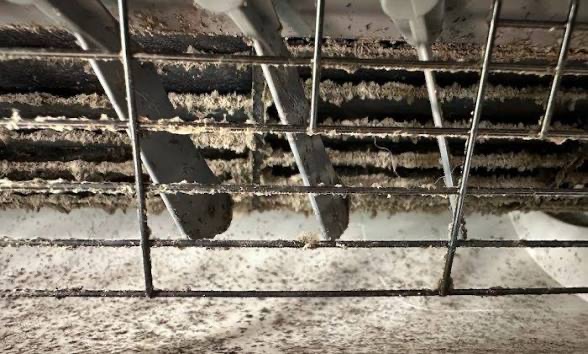
A wall-mounted mini-split is a small, dark box with a wet coil in it. In cooling and dehumidify modes the evaporator coil is streaming condensate for hours at a time, and the blower wheel sits right behind it pulling room air — dust, pollen, pet dander, wood-smoke soot — across that wet surface. Whatever sticks stays damp. Add a Lakes Region August and a drain pan that never quite empties, and the wheel and the back of the coil become a colony. The louvers and the wall below only show you the spores that got flung out.
What We Do About It
- Confirm it. Run the mini-split, smell it, look behind the louvers with a light. We tell you what we see before anything comes apart.
- Open, mask, bag. Cover, filters and louvers off; electronics sealed in plastic; bib bag hung so every drop goes into a bucket.
- Strip the growth. Coil-safe cleaner on the coil and wheel, dwell time, then a low-pressure flush and blade-by-blade brushing of the wheel until the surfaces are bare — not stained, bare.
- Fix the pan and the drain. Slime scrubbed out of the pan; condensate line flushed and tested. If the pan can’t drain, the smell returns no matter how clean the wheel is.
- Treat. An antimicrobial treatment goes on the clean coil, wheel and pan to slow regrowth. Safe once dry; we keep everyone out of the room until it is.
- Reassemble and run. Louvers and housing washed, mini-split back together, run in cool and heat. The start-up smell should be gone before we leave, not “better in a week.”
Pricing
$199 for the first indoor mini-split, compressor included, and $119 for each additional one on the same visit. That covers the full teardown, physical removal, antimicrobial treatment and drain clearing. A moldy unit and a dusty unit are the same price, so if one smells and the other two are merely dirty, all three get the same clean and the house comes to $437. There is no mold rate.
- Growth physically removed from the wheel, coil and pan
- Antimicrobial treatment applied after cleaning
- Condensate drain cleared and tested
- Louvers, housing and the wall below cleaned
- Cause identified so it doesn’t come back
- Safe for kids and pets once dry
Why It Grew — and How to Keep It From Coming Back
A pan that holds water
A slimed or kinked condensate line leaves a puddle in the pan between cycles. That puddle is the nursery. Clearing it is half the fix.
A mini-split that never dries
Running cool or dehumidify around the clock keeps the coil wet for weeks. A fan-only run for twenty minutes at shutdown lets it dry out; many remotes can do it automatically.
A closed-up camp
A seasonal place shut in October with a damp mini-split and opened in May has had seven months of humidity to work with. Clean at opening, and see our camp guide.
Food for growth
Soot, pollen, dander and cooking film stuck to a wet coil are what the growth eats. A yearly deep clean removes the food before the smell starts.
Common Questions
Why does it smell like dirty socks?
Bacteria and mold on the blower wheel and the back of the coil. The coil is wet whenever the unit cools or dehumidifies, and the wheel sits in the dark behind it. The sour smell is strongest in the first minute because that is when air first moves across the growth.
Is the black stuff dangerous?
It is usually mold, or mold mixed with dust and soot, and it should be removed rather than wiped. For most people it means a musty smell and allergy-type symptoms; anyone with asthma, allergies or a compromised immune system should not be breathing air pushed across it.
Can I spray a mold cleaner in there myself?
No. Sprays reach the louvers and the front of the coil, not the wheel or the pan where the growth lives, and bleach corrodes the aluminum fins. The fix is physical removal with the mini-split opened and bagged.
Will it come back?
Not for a long while if the cause is fixed. We clear the drain, confirm the mini-split can dry out, treat it, and set an interval that keeps it from getting that far again.
Related: Why your mini-split smells musty · Black specks on the louvers · Mini-split dripping water
Get Rid of the Smell for Good
Tell us what it smells like and when you notice it. That usually tells us what is growing where.