
A deep clean is a full teardown-in-place of the indoor mini-split. Cover, filters and louvers off; electronics masked; bib bag hung; evaporator coil and blower wheel flushed with a coil-safe cleaner and low-pressure water; drain pan and condensate line cleared; housing washed; mini-split sanitized, reassembled and run in both modes. $199 for the first mini-split with its compressor, $119 for each one after — the same price whether it is dusty or disgusting.
The ServiceWhat a Deep Clean Actually Includes
- Run it and read it. We start the mini-split, note the smell, the airflow, and whether the drain is moving, so we can tell you what we expect to find before anything comes apart.
- Open it up. Cover, mesh filters and louvers off. The control board, motor and sensors are masked with plastic before any water goes near the mini-split.
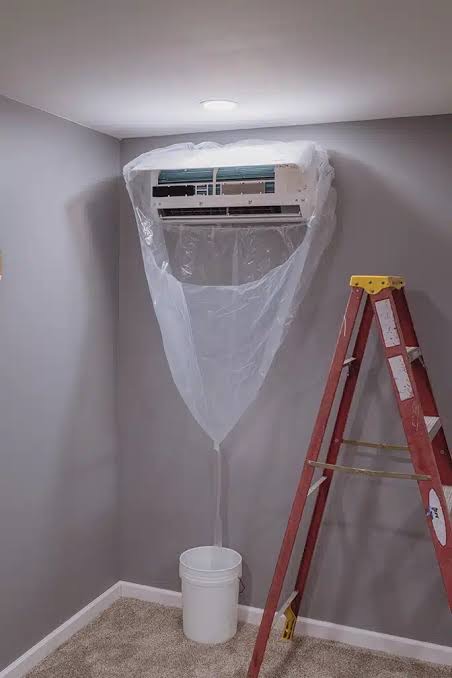
- Bag it. A bib bag hangs under the unit and funnels every drop into a bucket. Nothing touches your drywall, floor or furniture.
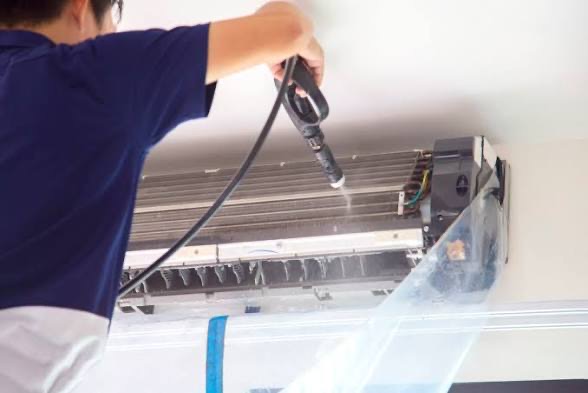
- Flush the coil. A coil-safe cleaner goes on, dwells, and is rinsed off at low pressure until the water runs clear. No pressure washer — it bends the fins that move the air.
- Do the blower wheel. The long barrel fan behind the coil is where most of the growth and soot lives. It is brushed and flushed blade by blade, in place, until the blades are bare.
- Clear the drain. The pan is cleaned and the condensate line is flushed and tested, so August humidity doesn’t back it up onto the wall.
- Sanitize, reassemble, run. The housing, louvers and filters are washed, the mini-split goes back together, and it runs in cool and heat while we check airflow and temperature.
Why the Filter Wash Isn’t Enough
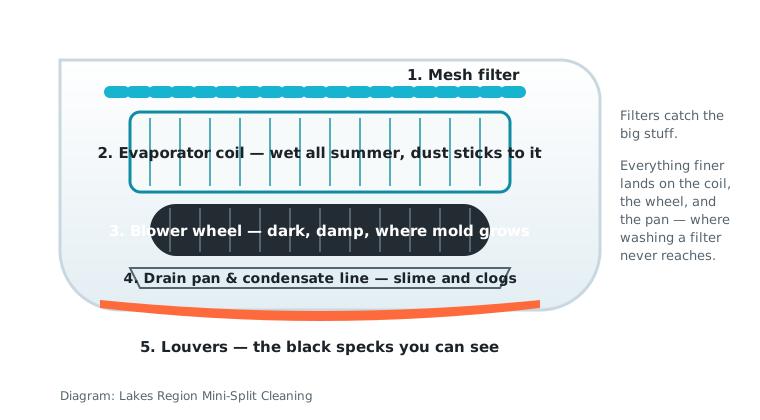
The mesh filter catches lint and coarse dust. Fine dust, pollen off the lake, wood-smoke soot, pet dander and cooking film pass through it, land on the coil while it is wet, and get flung onto the blower wheel. That wheel sits in the dark, damp back of the mini-split all season. It is the part that holds the smell and the part that steals airflow — and a filter wash, a spray can, or a vacuum on the louvers never reaches it.
Two Numbers, No Surprises
$199 for the first indoor mini-split, and that price includes its outdoor compressor. $119 for each additional mini-split cleaned on the same visit. $69 for each additional compressor. The first unit carries the drive out and the setup, which happen once per visit; after that you are only paying for the cleaning, which is why the second costs $80 less than the first. A unit loaded with wood-stove soot, kitchen grease or established mold takes us longer and costs you the same. Two on one compressor is $318, three is $437, four on two compressors is $625. A musty unit is handled as mold and odor removal at the same price.
- Cover, louvers and filters removed and washed
- Control board and motor masked before any water
- Evaporator coil flushed at low pressure until it runs clear
- Blower wheel brushed and flushed, not just sprayed
- Drain pan cleaned, condensate line flushed and tested
- Bib bag — nothing on your wall, floor or furniture
- Run-tested in cool and heat before we leave
- $199 first mini-split, $119 each additional — no condition surcharges
When a Mini-Split Is Due
You can tell
A musty or sour smell in the first minute after start-up. Black specks on the louvers or the wall below. Airflow noticeably weaker than it was. Water spitting from the front. Sneezing when it kicks on.
You can’t tell yet
Installed under a rebate in 2019–2024 and never opened since. A house that heats with wood or pellets. Pets. A lake house that runs dehumidify all summer. A camp that sat closed up over winter. Any of these puts a mini-split on a yearly schedule.
The interval table in our how-often guide puts numbers on each situation.
Common Questions
How long does a deep clean take?
About 60–90 minutes for the first mini-split and 45–60 for each additional one on the same visit. Heavy soot or mold adds time, not cost.
What is a bib bag and why does it matter?
A wide plastic sleeve that hangs under the opened mini-split and funnels every drop of wash water into a bucket. It is what lets a coil and wheel be flushed properly on the wall without wetting the drywall or the floor.
Can a deep clean damage the unit?
Not when it is done with the board masked, a coil-safe cleaner, and low-pressure water. Damage comes from the wrong tools — pressure washers bend fins, bleach corrodes aluminum, and aerosol coil cleaners leave a residue that grabs dust.
How do I know it worked?
You see the bucket. Then the mini-split is run in cool and heat, airflow is checked, and the start-up smell is gone. Most people notice the airflow before we have packed up.
Do you clean the outdoor unit too?
The first is included in the $199; each additional compressor is $69, cleared of leaves, cottonwood and grass, coil rinsed. A blocked outdoor coil is a common reason a system stops keeping up in July.
Is a moldy or soot-loaded mini-split more expensive?
No. Condition never changes the price. It takes us longer, and that is our problem, not your invoice.
Related: What mini-split cleaning costs in NH · Filter wash vs. a real deep clean · What a dirty coil costs you in electricity
Ready for a Mini-Split That Moves Air Again?
Per-mini-split prices you can see, a teardown that leaves nothing on your wall, and scheduling that fits a Lakes Region calendar.