
Three numbers. Published.
The first one carries the drive out and the setup, which happen once. After that you are only paying for cleaning. Condition never enters into it: dusty, musty, black-specked or soot-loaded from a wood stove, the number is the same.
What a real cleaning looks like.
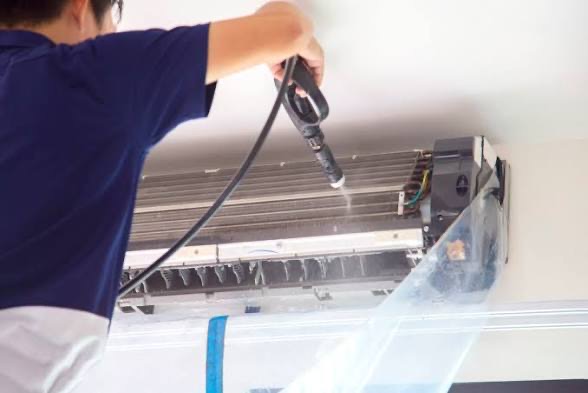
Not a filter rinse and a wipe of the louvers. The cover comes off, the electronics get masked, a bib bag goes up, and the parts you cannot see get flushed.
The dirt is past the filter.
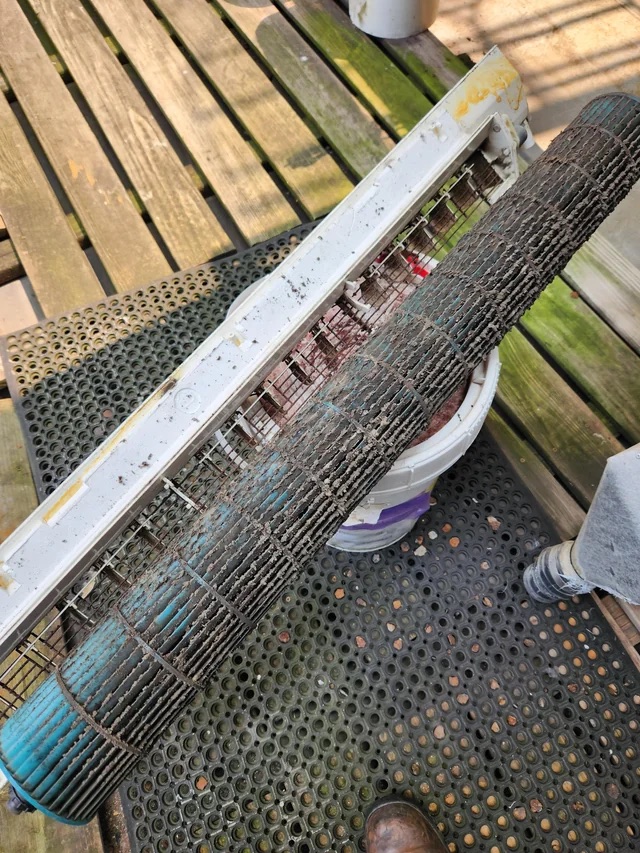
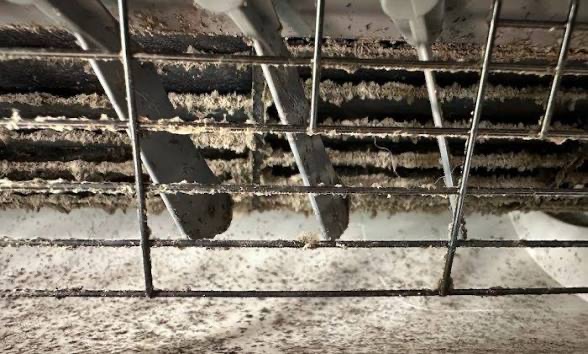
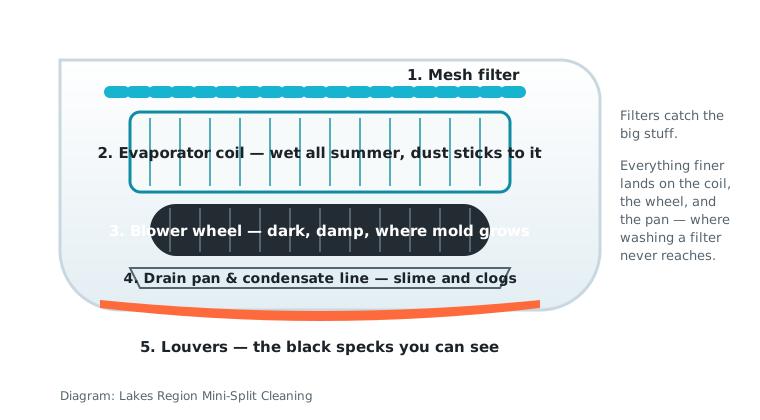
The mesh you rinse in the sink catches lint and coarse dust. Everything finer goes straight through it: pollen off the lake, wood-smoke soot, pet dander, cooking film. It lands on a coil that is wet all summer and gets flung onto the blower wheel behind it.
That wheel sits in the dark, damp back of the unit. It is where the smell comes from and where your airflow went, and nothing you can reach from the front will touch it.
See What a Deep Clean Includes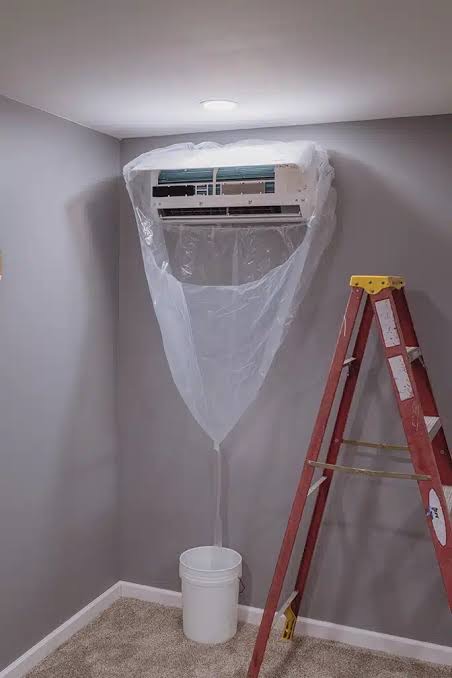
Four ways we clean a mini-split.
Deep Cleaning
Cover off, bib bag up, coil and blower wheel flushed until the water runs clear, drain pan and louvers cleaned, sanitized and run-tested. $199 first, $119 each after.
Mold & Odor Removal
For the musty start-up smell and the black specks on the louvers. Growth removed from the wheel and coil, drain cleared, antimicrobial treatment applied. No mold surcharge.
Seasonal Maintenance
Spring and fall visits that keep a clean unit clean: filters, coil, condensate line, outdoor unit cleared and rinsed. Same price list, twice a year.
Rentals, Camps & Commercial
Every unit on the property in one visit, scheduled around turnover, with a per-unit record for your files. Everything after the first is $119, so the average falls the more you have.
How a deep clean goes.
- Look and listen first. We run the unit, note the smell, the airflow and the drain, and tell you what we expect to find before anything comes apart.
- Open and bag. Cover, filters and louvers off. Board, motor and sensors masked in plastic. A bib bag hung so wash water goes into a bucket, not down your wall.
- Flush the coil and the wheel. Coil-safe cleaner, dwell time, low-pressure rinse until it runs clear. The blower wheel gets brushed and flushed blade by blade.
- Clear the drain. Pan cleaned, condensate line flushed and tested, so August humidity cannot back it up onto the wall.
- Sanitize, reassemble, run. Housing washed, unit put back together, run in cool and heat with the airflow checked. Then you see the bucket.
Does yours need one?
Tick anything you have noticed. It does not change the price, but it tells us what we are walking into.
Tick a box to see what it usually means.
Common questions.
How much does it cost?
$199 for the first mini-split, compressor included, and $119 for each one after on the same visit. Extra compressors are $69. Two on one compressor is $318; three is $437.
Why does it smell musty?
Mold and bacteria on the blower wheel, the back of the coil and in the drain pan. Start-up pushes air across that growth, so the first minute is the worst. It has to be physically removed with the unit open.
How often should it be cleaned?
Every 1–2 years for a year-round home; every year with pets, wood or pellet heat, or a unit that runs dehumidify all summer. Seasonal camps: at opening.
Will you make a mess of the wall?
No. A bib bag catches every drop into a bucket, electronics are masked before any water is used, and we work at low pressure.
Do you install or repair?
No. We clean. Refrigerant, electrical faults and failed parts are licensed HVAC work, and we say plainly when what we found needs one.
We come to you.
From Franklin and Tilton up to Plymouth, right around to Wolfeboro and Ossipee. Find your town below for what we usually run into there and how soon we can get to you.
The homeowner’s library.
What cleaning really costs, how often to do it, why it smells and what actually fixes that, living with wood heat and a heat pump, opening and closing a camp, and what a dirty coil costs you in electricity. Plain-English guides, no sales pitch →